
School Based Nursery Funding F.A.Q.
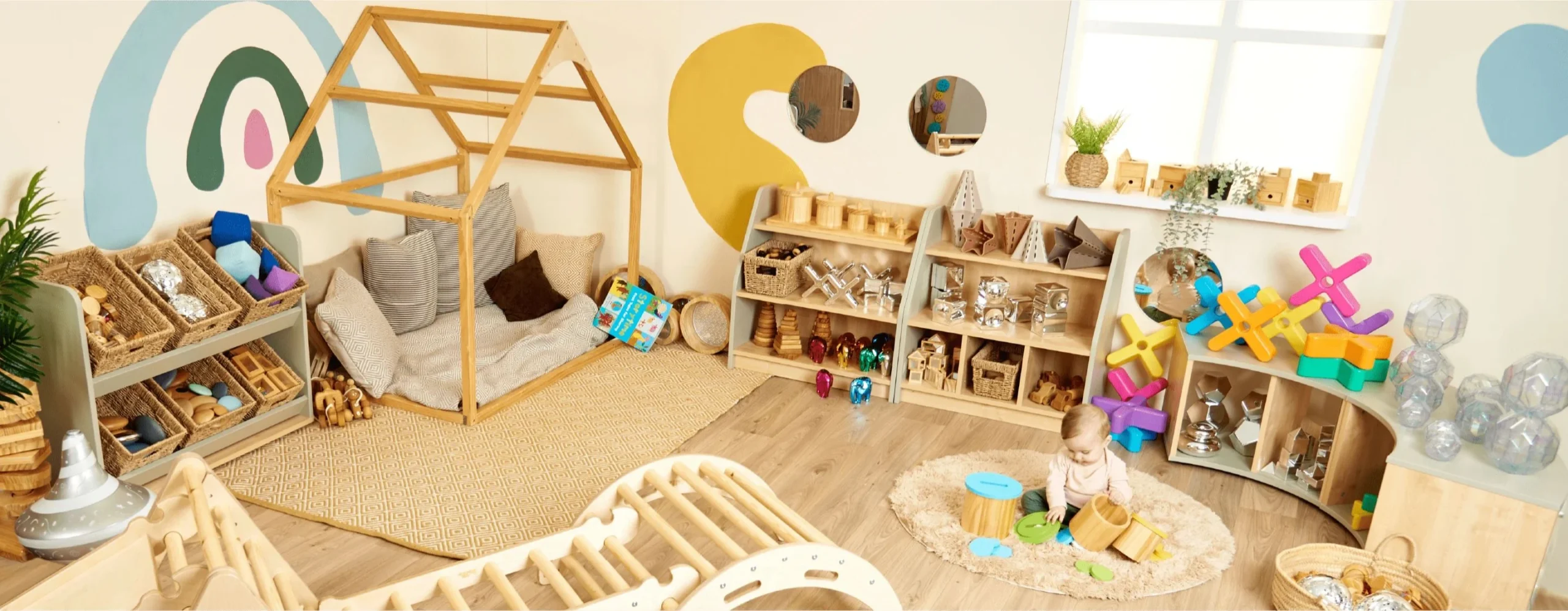
What Is School-Based Nursery Capital Funding?
Are you unsure on how the process works? Maybe you’re unsure if you can even apply for the school based nursery funding, please do not worry!
You’ll have the option to reach out to a member of our expert team for further information.
This article will cover everything you need to know, then you can make an easy decision on whether or not you can apply.
If you still need assistance after reading through this article, you’ll have the option to reach out to a member of our expert team for further information.
General information/Eligibility
Who can apply for SBN Funding?
Well, that’s a great question, and it’s one we have the answer to. Firstly, your school would need to reside within England and be one of the following;
A state-funded school,
A maintained nursery school,
On a Best Start Family Hub site.
Unlike in phase 1 & 2, schools cannot apply for School Based Nursery Funding themselves, phase 3 requires your local authority to submit these proposals for the grant. This will require the school and local authority to work together very closely, and carefully plan out the proposal.
I already applied in Phase 1 & 2, and was not successful – Can I still apply?
Short answer is – yes! You can absolutely reapply for school-based nursery funding during phase three, even if you wasn’t successful in phase 1 & 2.
Remember, as mentioned above. You the school, cannot directly apply in phase 3 – meaning you’ll need to get your local authority onboard and only they can submit the application.
I was successful in phase 1 or 2, can I still apply for phase 3?
Absolutely! Schools that were successful in phase 1 or phase 2 of the programme and received SBN capital grant funding are eligible for phase 3.
In such cases, local authorities should only propose projects that add new places beyond what was delivered in earlier phases and that represent good value for money.
How can I apply for School Based Nursery Funding (Phase 3)?
Remember: Applications for Phase 3 must be submitted by local authorities, not the individual schools. You can get the ball rolling by doing the following;
Discussing the proposal with their local authority early years team
Exploring whether the project aligns with local childcare sufficiency plans
Providing information about the space available and potential capacity for new places
Supporting the local authority in developing the project proposal
The Department for Education has provided a template proposal form to help local authorities gather the information required for funding bids. The final route for submitting proposals will be confirmed in updated guidance expected in Spring 2026.
Here, you’ll find below the attached copy of the form to complete with your local authority, should they agree there is a need and a case to progress further.
After applying, am I guaranteed to get funding?
The short answer is; unfortunately not. As you can imagine, there are a lot of schools that are interested in this funding, as it’ll have a huge positive impact on their schools. However, this is looked at in great detail as to whether or not it’s suitable for each school. Please click HERE to view eligibility checklist that the Department for Education (DfE) will mark your proposal against.
It’s worth noting, DfE will also look at how the grant will be spent, and are within their rights to refuse to cover expenses should they not fall into their guidelines. We will go into dive deeper together in another section later in the article as to what is and what is not covered under DfE guidelines.
How quickly will I receive the school-based nursery funding, if successful?
There is currently no exact date to receive payment. However, your local authority if successful with the application will receive a grant letter in Spring 2027.
Please note that does not mean payments will be made exactly when successful grant letters are received, in certain cases it may take a little longer. Below is an estimated time period of time where you’ll receive payments, it is separated into 3 chunks. DfE recommend that you try not to complete works all in one go, it is advised that you work around payment schedules (see below)
> 20% of total funding in Year 1 (April 2027 to March 2028)
> 30% in Year 2 (April 2028 to March 2029)
> 50% in Year 3 (April 2029 to March 2030)
“Applicants should avoid concentrating all activity in a single year or deferring critical delivery to the final year. A balanced approach helps mitigate delivery risks and increases the likelihood of successful outcomes.“
How much can schools apply for?
It is said in the DfE guidelines that schools can apply for up to £1,000,000. However, the final decision is with the DfE to decide how much each school gets based on costings provided. They will evaluate what is, and what isn’t covered by funding, it has been mentioned based on phase 1 & 2 it should cost no more than £500,000. However, they appreciate that every project is unique that will also be taken into consideration.
Local authorities will be required to submit justification of costs for all projects, which should be developed using intelligence from recent and comparable projects and/or through engagement with the market. Justification should also include an explanation for any abnormal costs e.g. listed buildings, removal of asbestos. This ensures that pricing assumptions are evidence-based and reflect current market conditions, supporting value for money and increasing the accuracy of your cost estimating.
Expected timelines/Use of funding
Lets take a look together to understand timelines for this funding, how long you’ll have to create your application (Closing date for applications), and how long you’ll have to spend any funding you’re granted. You will then come away with the correct knowledge you need to take action. Also, we would hate for you to miss out, so understanding the deadline is extremely important!
Deadline for submitting applications.
Short answer – 30th of September 2026.
Any applications that are submitted after this deadline in short, will not be considered. However it is worth noting that DfE can extend and reopen the deadline if they deem it necessary. If they update the deadline, this guidance will also be updated.
Will we need to spend the SBN Grant within a certain time-frame?
If you are successful with your proposal, you’ll have until the end of September 2030. It is worth noting that any unspent funding will need to be sent back to the DfE.
Can we use the grant for another project we have?
Whilst that would be nice, the funding cannot be used for another project you have within the school. This grant must be used for the reason it was given in the first instance – to open and supply a new school based nursery. Any unspent funding must be returned to DfE, it is recommended that you make full use of the grant provided to ensure you do not need to send any money back unnecessarily.
What can the funding be used for?
Here, you will find examples of what is covered and you should keep in mind that this list is not exhaustive, it’s only some examples. If you have doubts about what is capital expenditure, you should seek local professional advice.
Schools often misunderstand what funding can and cannot be used for. Some funding is capital (buildings and assets), while some is revenue (staffing and running costs). The distinction matters because misuse can create audit or compliance issues, lets go through this together and look at a few examples of what you can use this particular funding for to ensure you’re compliant with the rules.
Nursery furniture
You can use this funding to furnish your new setting with appropriate age related furniture. These items are a few examples of what you can use the funding for; Age appropriate chairs, that are both durable, and vary in height for each age range. Tables with blunted or rounded edges. Resting Furniture, examples are as follows; Cots, low beds, and sleep mats for infants and toddlers. Changing area furniture. Specialist Learning Zones such as: Soft play blocks, seating for reading areas, sensory room equipment, and built-in role-play stations. Outdoor Furniture: Weather-resistant picnic benches, outdoor seating, and lockable storage for outdoor play equipment
Building work
This can be anything from a completely new building on the grounds of existing school grounds – to repurpose existing spaces that aren’t being used – this does include structural changes. Removing and encapsulating asbestos.(Listed here are the typical works that are covered for SBN funding.) Flooring, child-height sinks, room dividers, storage systems, toilets. Lighting, heating improvements, new nursery classrooms. Dedicated nursery wings. Adapted community spaces, repurposed surplus school areas
Outdoor spaces
This is a definite yes, you are allowed to use the funding for outdoor spaces, this includes all of the necessary play equipment, fences, canopies, and storage sheds. Below you’ll find a list of examples, that can be bought using the SBN funding.
Physical development areas, climbing equipment, balancing trails. Wheeled play zones, sensory paths, exploration spaces. Mud kitchens, investigation areas, digging stations. Planting Areas, literacy environments, storytelling huts. Reading gardens, phonics spaces
TTS Top tip: Outdoor provision should be linked directly to educational outcomes rather than aesthetics alone.
Accessibility, Security & Inclusion
This is all about accessibility & inclusion for everybody, installation of wheelchair ramps, adapted toilets and inclusive design in line with current regulations.
Physical accessibility, ramps, widened doors, accessible toilets.
Sensory support, sensory rooms, soft play spaces, low-stimulation environments, communication support.
Visual communication systems, specialist equipment, adapted furniture.
Security and Safeguarding, secure fencing, gates, entry systems, CCTV, Access control., safeguarding adaptations.
Kitchen and Food Preparation Areas. Snack preparation areas, food storage refrigeration, bottle preparation facilities
Payment of professionals – This covers Advice and services, design fees and survey costs that are required to deliver the capital works.
Equipment – This covers educational pieces of equipment, your sensory toys and and non-consumable classroom resources.
What funding often cannot be used for
Salaries – The funding cannot be used for the following examples; ongoing expenses including staffing, rent, service charges and annual software licences
Unrelated School Projects – This can be tempting, but it will not be approved spending if you use it for the examples shown here; unrelated classroom projects, non-nursery improvements, whole-school deficits
Everyday Consumables – The funding cannot be used for everyday consumables, a few examples; books, stationary, paint, paper, snacks, nappies, craft materials
Note; Capital programmes are generally intended for physical assets and infrastructure rather than routine operating costs.
IMPORTANT – It is important the examples listed above is not at all an exhaustive list. Just a few examples to give you an idea into what is and isn’t approved spending for the funding.
How to ensure a strong application for funding
Application overview
A strong school-based nursery funding grant application usually succeeds because it clearly demonstrates need, impact, deliverability, and value for money.
For a strong application, you should try and include the answers to the questions shown below. These are examples but can be used to help strengthen your application, you may add additional information if you feel it would help.
Why is the nursery needed? Who will benefit? What evidence supports the demand?
In your application, we recommend you include data relevant to your area, this will demonstrate clear need within your local community. Information such as;
Number of children between the ages of 0-5 in the area if known, your council may be able to give you an estimate on this. This should also include number of children without a nursery space. Waiting lists at local nurseries. Children in the area with SEND requiring additional spaces in the area, this will help your application if there is a clear need for SEND nursery spaces in the community. Include very clear, and detailed costings for the project you are proposing.
All strong applications will define clearly, what the project will bring to the table, we’re here to help with a few examples of what you should consider using on your application.
New nursery classroom(s). You should show how many nursery spaces will this provide. Outdoor learning environment (if applicable) You should attempt to include a SEND-inclusive nursery provision at this nursery. Questions for the application (Existing nursery provision and capacity)
You’ll be expected to answer questions that cover the capacity and the operational times and dates. Lets go into further detail together. Please bare in mind this is for those with already existing nurseries and are looking to increase capacity. We will go through what to do if you’re launching a new nursery setting altogether afterwards.
The question “What is the current capacity of existing nursery provision?” refers to the exact number of early years childcare places your school is legally and physically approved to offer right now, before any new grant-funded expansion takes place. The DfE uses this baseline figure to calculate exactly how many additional new places the capital grant will create, which is a core metric for assessing your application’s value for money.
Questions for the application (Existing nursery provision and capacity)
How to Calculate and State Your Current Capacity
When filling out this section of the application, do not guess the number; it must align perfectly with your official records. Break it down using the following criteria: Age Group Breakdown: You must state your current capacity explicitly by age brackets, usually divided into Under 2s, 2-year-olds, and 3-to-4-year-olds.
Why do the DfE ask for this information?
If your current capacity is 20 places, and your project plans show a post-renovation capacity of 50 places, your application officially registers as creating 30 new places.
Childcare Sufficiency Gaps. The DfE and your Local Authority cross-reference your current capacity against local data to prove that expanding your setting will directly fill a childcare shortfall in your specific postcode.
Note; This should reflect the maximum number of children at any given time in the nursery space, not necessarily the total capacity of the space, for example if the staff structure doesn’t allow. Do not double-count places used in both morning and afternoon sessions – only include the highest number of children expected to be present at once.
What will be the opening hours of the nursery provision? This question is on the application itself, so for this you’ll need to explain each day in the week Mon-Sun. Even if you’re not going to be operational on the weekends you can just put “Closed” next to them. So please use the below as an example;
Monday: 8:00am – 6:00pm
Tuesday: 8:00am – 6:00pm
Wednesday: 8:00am – 6:00pm
Thursday: 8:00am – 6:00pm
Friday: 8:00am – 6:00pm
Saturday: Closed
Sunday: Closed
You will also be asked whether or not the existing nursery provides holiday childcare, such as summer holidays and out of term time holidays (Half term breaks), and if the answer is yes, what are the opening hours during the holidays Mon-Sun. For example; you could put the following;
Monday: 8:00am – 6:00pm
Tuesday: 8:00am – 6:00pm
Wednesday: 8:00am – 6:00pm
Thursday: 8:00am – 6:00pm
Friday: 8:00am – 6:00pm
Saturday: Closed
Sunday: Closed
If you aren’t expecting to be open during holidays you could leave it as just “Closed for the holiday periods”. Maybe you’re operating during holiday periods, but at reduced hours, so please amend the times as necessary.
I’m interested in a quote, how do I get one from TTS?
You can use the contact form below to be put in touch with one of the members from our expert team. You’ll receive a call to discuss it in greater detail once you’ve submitted a form. We are excited to work alongside you on this journey!
Click here to contact us
Why not check out our Inspiring Early Years Environments
You’ll find a lot of inspiration here, along side our wide variety of products split into age categories to make your journey easier.
Still have a question?
Raise a complaint about our service